Resistance training is most commonly associated with building muscle and gaining strength. However, lifting can produce many other beneficial adaptations, from improving body composition and bone density to supporting flexibility, athletic performance, and long-term independence.
These benefits are related, but they are not interchangeable. Training to build muscle is not exactly the same as training for a heavier one-rep max, a faster sprint, or better endurance performance. Understanding what resistance training can do, and how those adaptations occur, helps us match our training to the outcomes we want.
Key Takeaways
- Resistance training builds muscle, preserves lean mass during weight loss, and supports bone density.
- Strength gains are specific to the exercises, loads, and physical tasks we train.
- Lifting can complement sport and endurance training while improving flexibility through challenging ranges of motion.
- Resistance training helps maintain daily function with age and can reduce specific injury risks.
Table of Contents
- Body Composition Benefits of Weight Training
- Strength and Athletic Performance Benefits
- Flexibility Benefits of Resistance Training
- Health, Longevity, and Daily Function
- The Bigger Picture
Body Composition Benefits of Weight Training
Resistance training can improve body composition in three primary ways: building muscle, retaining lean mass during weight loss, and increasing or preserving bone density.
1. Building Muscle Mass
We may want more muscle for aesthetic purposes, better health and function, or improved athletic performance. Resistance training is the most effective exercise method for achieving this, although the stimulus required for muscle growth depends on our starting point.
For someone who has been bedridden or had a limb immobilized for an extended period, the threshold for growth is very low. Simply returning to general movement against gravity may provide enough stimulus to regain muscle.
For someone who is mobile but sedentary, almost any intentional exercise can initially stimulate some hypertrophy. Even aerobic activities such as running or cycling can produce muscle growth in previously untrained individuals.
Once we become somewhat trained, however, further gains require a greater stimulus. This is where resistance training becomes particularly useful.
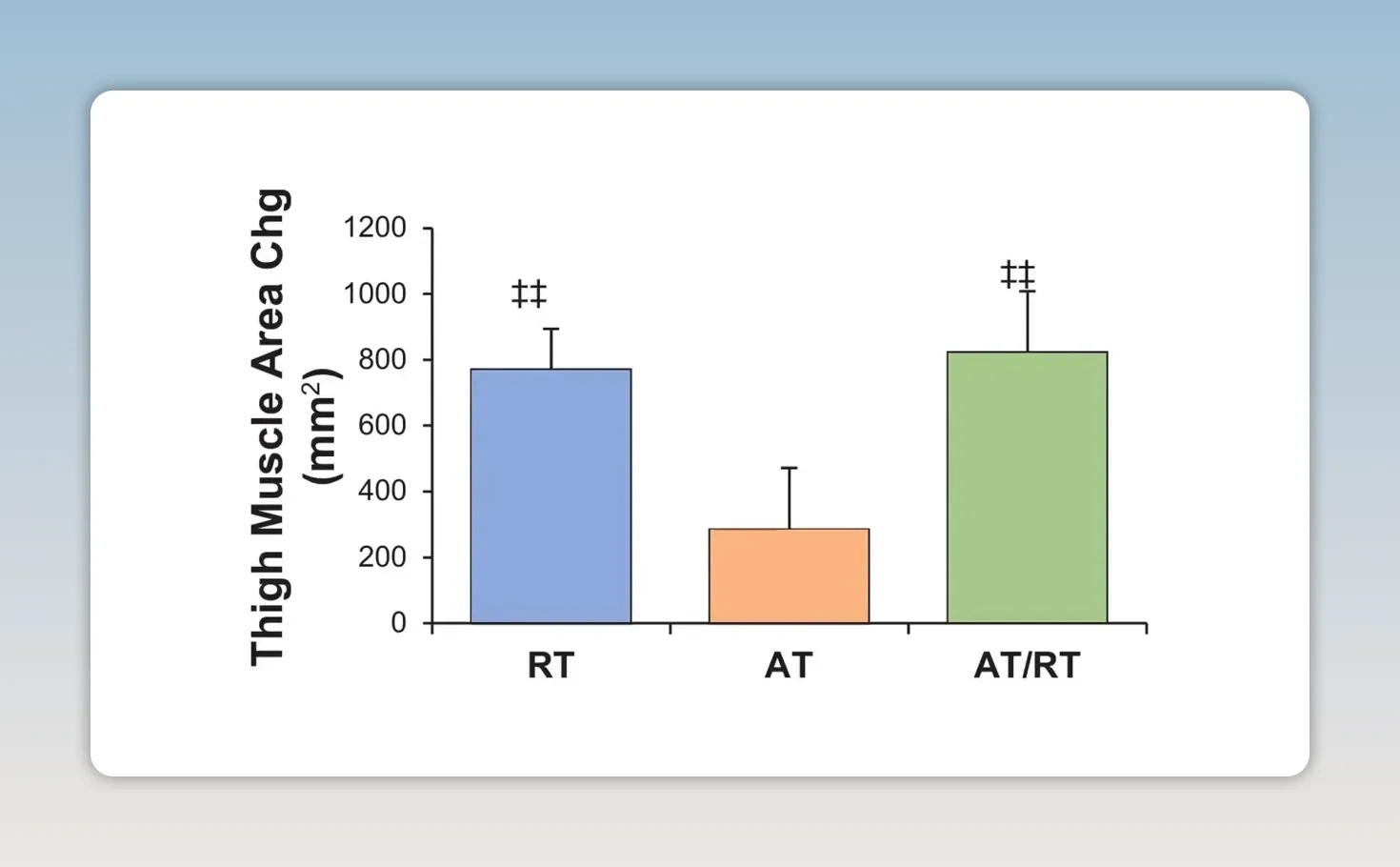
A study comparing resistance, aerobic, and combined training in sedentary adults found that all three approaches increased thigh muscle cross-sectional area. However, the two groups that included resistance training experienced the greatest gains.
The amount of muscle we gain also depends on training volume, proximity to failure, rep range, rest periods, exercise selection, and our individual genetic response.
As a general overview, training for muscle growth involves the following:
- Use dynamic exercises through a large range of motion. Train the muscle as it lengthens and shortens under resistance.
- Work within approximately 5 to 20 repetitions per set. Adjust the load to suit the intended rep range.
- Take sets close to failure. Aim to finish with around three or fewer repetitions in reserve, meaning the number of additional reps we could still perform.
- Accumulate sufficient weekly volume. For muscle groups we want to prioritize, at least 10 total sets per week is a useful general target.
- Progress over time. Increase repetitions or load when we can do so while maintaining effective technique.
2. Retaining Lean Mass During Fat Loss
Weight loss is primarily driven by a calorie deficit, usually achieved by limiting dietary calorie intake rather than relying solely on increased energy expenditure. But weight lost is not necessarily all body fat.
Diet interventions often result in roughly three-quarters of the lost weight coming from fat and one-quarter from lean mass. These proportions vary, but the important point is that losing weight and losing fat are not the same thing.
Lean mass includes muscle, bone, organs, and other nonfat tissues. Generally, our goal during a fat-loss phase is to reduce fat while retaining as much lean tissue as possible.
Resistance training is particularly effective here because it provides a stimulus to maintain muscle during calorie restriction. The more lean mass we retain, the greater the proportion of our weight loss that comes from fat.
For example, one study compared a calorie-restricted diet alone with the same dietary approach combined with resistance training three times per week. Both groups lost a similar amount of body weight. However, the resistance-training group maintained its lean mass, while the diet-only group experienced a small reduction.
As a result, the group that lifted lost more total body fat. The benefit was not simply a larger change on the scale, but a more favorable change in what that weight represented.
3. Improving and Preserving Bone Density
Bone mass increases throughout childhood and adolescence, reaches a peak in adulthood, and generally declines later in life. Women typically experience a greater decline following menopause because of hormonal changes.
Lower bone density increases the risk of fractures from falls or other impacts. In older adults, these fractures can have serious, sometimes fatal, consequences.
Physical activity can help build bone during the developmental years and minimize losses with aging. Weight-bearing exercise is generally beneficial, with resistance training appearing especially effective.
In a study comparing eight months of resistance training, aerobic exercise, or no exercise in older women:
- Resistance training produced a small increase in hip bone density.
- Aerobic exercise largely prevented further bone loss.
- No exercise resulted in a decline in bone density.
Maintaining bone density is valuable even when large increases do not occur. Preventing a decline is itself a meaningful outcome.
Strength and Athletic Performance Benefits
4. Getting Stronger at Specific Tasks
Lifting weights makes us stronger, but strength needs to be defined in relation to a task.
A common measure is the one-repetition maximum, or 1RM: the heaviest load we can lift once in a particular exercise. In powerlifting, performance is determined by the combined weight lifted in the squat, bench press, and deadlift. In Olympic weightlifting, it is the combined weight lifted in the snatch and clean and jerk.
However, strength can also be assessed using different exercises, muscle actions, and rep ranges:
- Running-based athletes may develop eccentric hamstring strength to help reduce hamstring strain risk.
- Climbers may prioritize isometric finger and forearm strength to maintain their grip.
- CrossFit athletes may emphasize strength endurance to complete repeated efforts more quickly.
Strength is specific to the task. To maximize improvement in a particular event or test, training should resemble its demands.
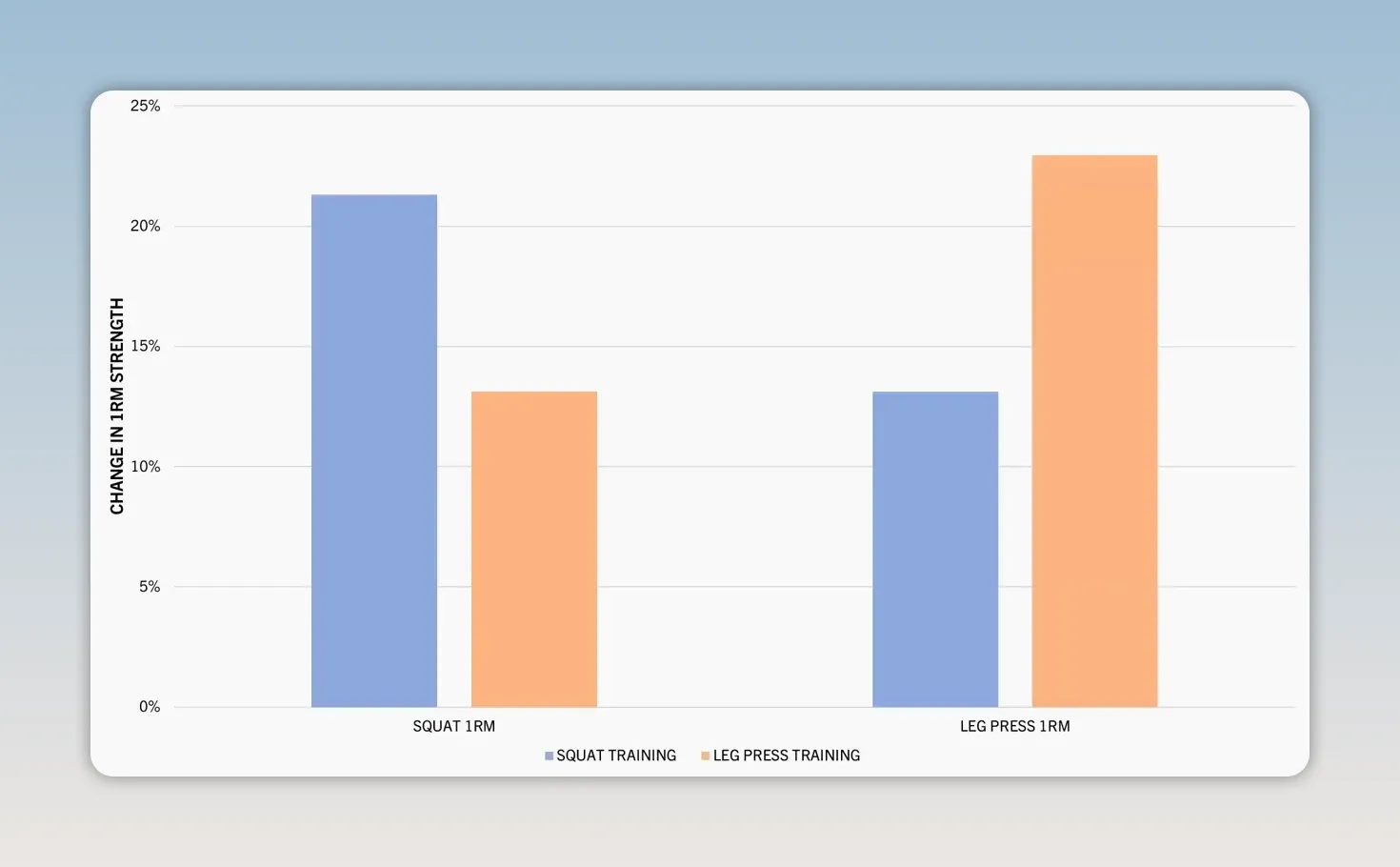
This is demonstrated by research comparing squat and leg press training. Both approaches improved strength, but squat training produced greater improvements in squat 1RM, while leg press training produced greater improvements in leg press 1RM.
The same principle applies to loading. A study comparing heavier loads and lower repetitions with lighter loads and higher repetitions found greater bench press 1RM improvements in the heavier-load group.
However, when participants were tested on the maximum repetitions they could perform at 50% of 1RM, the lighter-load group improved, while the heavier-load group showed no significant change.
Neither approach was universally superior. Each was better suited to a different expression of strength.
5. Improving Sport Performance
Resistance training can also improve performance outside the weight room when added to regular sport practice.
Examples include:
- Handball: Adding moderate- or heavy-load resistance training improved throwing velocity more than handball training alone.
- Cycling: Adding resistance training produced greater improvements in power output during five-minute and 45-minute cycling tests.
- Tennis: Resistance training improved serve velocity compared with tennis training alone.
Traditional resistance training can be effective for many athletic goals. More specific methods may also be useful when they target the relevant muscle groups, movement patterns, and muscle contraction types.
For example, loaded jumps may help improve vertical jump performance, resisted sprints may support acceleration, and weighted throws may enhance throwing or striking speed and power.
The aim is to use resistance training to complement the demands of the sport, rather than treating gym performance as the only outcome that matters.
6. Supporting Endurance Performance
Resistance training can benefit endurance in two distinct ways.
First, it can produce small improvements in aerobic fitness in people who are not exercising. In sedentary adults, an eight-week comparison of resistance training, endurance training, and combined training found increases in VO2 max in all three groups.
However, improvements were substantially greater in the two groups that included aerobic training. So, although lifting can improve aerobic fitness from a low starting point, aerobic training is generally necessary for further development.
Second, lifting can improve endurance performance when added to endurance training, even in well-trained athletes.
One study found that eight weeks of traditional heavy resistance training or complex resistance training improved five-kilometer running performance more than running training alone in well-trained distance runners.
This is thought to occur partly through improvements in movement economy, meaning a lower energy cost for a given movement. Better coordination and increased tendon stiffness may allow greater use of elastic energy, helping an athlete move more efficiently.
This is an important distinction: endurance performance can improve without resistance training becoming a replacement for endurance work.
Flexibility Benefits of Resistance Training
7. Increasing Range of Motion
Flexibility may be useful for everyday function, achieving a greater range of motion during lifting, or meeting the demands of a particular sport.
Stretching is the most commonly prescribed method, but resistance training can also be effective. When an exercise challenges our range of motion, flexibility typically improves.
A systematic review and meta-analysis found that resistance training improved range of motion to a similar magnitude as stretching.
In a more specific comparison, participants performed either straight-leg deadlifts and Jefferson curls or traditional static stretching. Both groups improved their sit-and-reach results by approximately 6 to 7 centimeters.
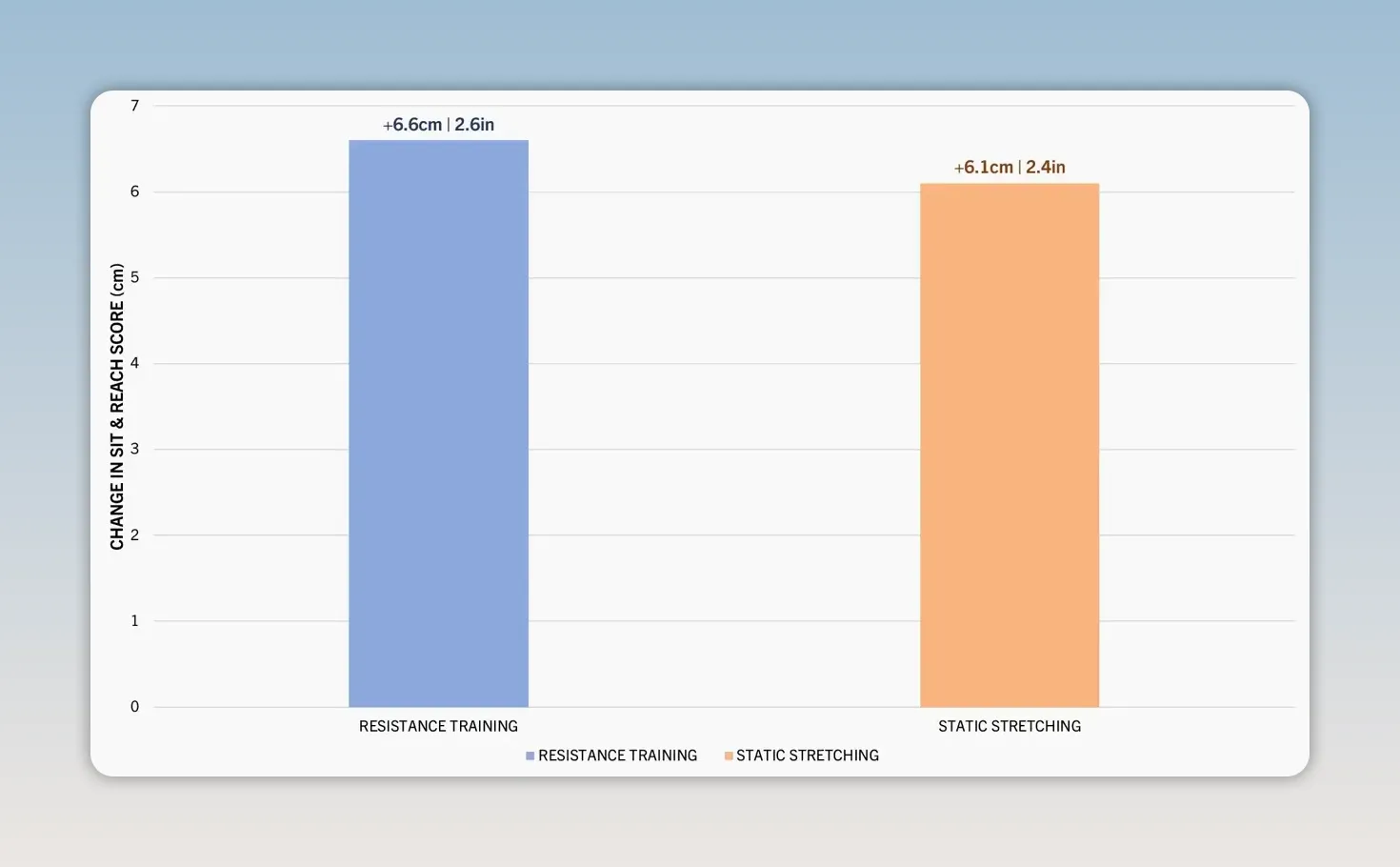
The practical point is not that every resistance exercise improves every aspect of flexibility. Rather, lifting through a challenging range of motion can develop flexibility alongside strength.
Health, Longevity, and Daily Function
8. Maintaining Functional Capacity With Age
Muscle mass, strength, bone density, and flexibility all contribute to our ability to function. Research also links these qualities with long-term health outcomes:
- Low muscle mass in the arms and legs has been associated with higher all-cause mortality risk.
- Greater grip strength in older adults has been associated with lower all-cause mortality risk.
- Osteopenia, or moderately low bone density, has been associated with slightly elevated mortality risk, while osteoporosis has been associated with a substantially greater risk.
- Higher flexibility scores have been associated with lower mortality risk in both men and women.
These are associations, not proof that increasing any single measurement directly extends life. However, they reinforce the importance of the physical qualities resistance training can help develop.
One of the clearest practical benefits is improved functional capacity: our ability to perform the tasks required for daily living.
This includes walking, bending down, carrying objects, reaching overhead, and standing up from a chair. Younger people usually have sufficient capacity to perform these tasks without much difficulty, but that capacity tends to decline with age.
Resistance training can improve function and help limit that decline. For example, a 10-week study in older adults found improvements in walking time, sit-to-stand performance, and handgrip strength.
These outcomes may not receive the same attention as muscle growth or a heavier squat, but they matter for remaining mobile and independent.
9. Reducing Injury Risk in Sport and Everyday Activity
Appropriately implemented resistance training can strengthen muscles and improve the tolerance of joints and connective tissues to physical activity. This can reduce injury rates in other sports and exercises.
Two examples illustrate the value of targeted training:
- A meta-analysis of Nordic hamstring exercise programs found a 51% reduction in hamstring injuries across running-based sports.
- An adductor strengthening study reported a 41% reduction in groin problems in semiprofessional soccer players.
These results relate to specific training interventions and populations. They do not mean that any lifting program will reduce every type of injury by the same amount.
The benefits are not limited to athletes, either. Resistance training may help reduce pain and discomfort associated with occupational activity, physical labor, and everyday tasks.
In factory workers, a 16-week upper-body resistance-band routine significantly reduced reported upper-body pain and discomfort compared with workers who did not perform the exercises.
The broader principle is to build physical capacity that matches the demands we regularly encounter, whether those demands come from sport, work, or daily life.
The Bigger Picture
Weight training is much more than a method for building bigger muscles. It can improve body composition, preserve lean mass during weight loss, support bone density, increase task-specific strength, and enhance sport and endurance performance.
It can also improve flexibility, maintain the physical capacity needed for independence, and reduce the risk of certain injuries when exercises are selected and implemented appropriately.
The best approach depends on the adaptation we want. Muscle growth requires an adequate hypertrophic stimulus. Strength improves most in the tasks we practice. Flexibility benefits from challenging range of motion, and injury-reduction work should address the relevant physical demands.
Together, these adaptations make resistance training a valuable part of training for performance, health, and function throughout life.
|